Gravity Control and Superconductors
Ning Li's AC gravity, Podkletnov's spinning discs, and the replication failures that discipline them.
Everyone wants antigravity. Superconductors — with their spooky levitation and large-scale quantum order — feel like where it ought to live. This chapter is a case study in telling two things apart. One is a real, tiny effect that mainstream physics confirms. The other is a large, useful effect that keeps failing to replicate. It also holds the book's best example of a scientist following the evidence to a "no."
The real effect: gravitomagnetism
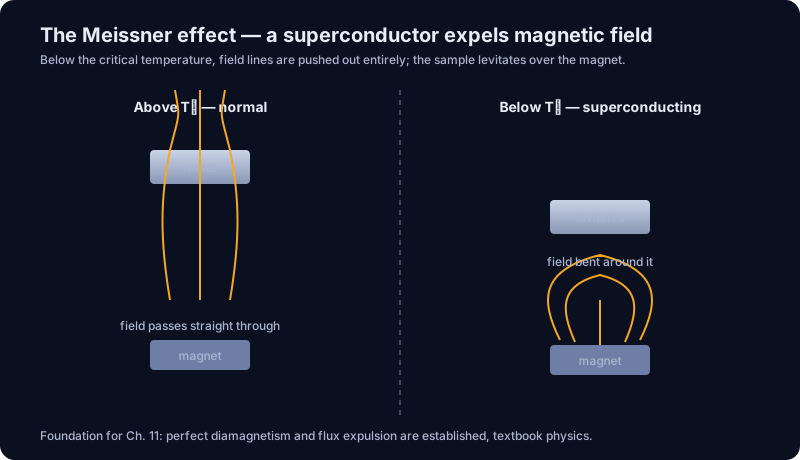
Einstein's general relativity, in its weak-field form, predicts that gravity has a "magnetic" side. A spinning mass drags spacetime slightly around with it. This effect is called gravitomagnetism, or frame-dragging (the formal name is gravitoelectromagnetism, GEM). This is not fringe. It is textbook GR, and it was measured. NASA's Gravity Probe B (results published 2011) detected Earth's frame-dragging, matching general relativity.
Definitive Gravitomagnetism is real weak-field GR, and frame-dragging is measured (Gravity Probe B, LAGEOS). The size, though, is minuscule. That number is the yardstick for everything that follows.
The claims: amplifying gravity with spin
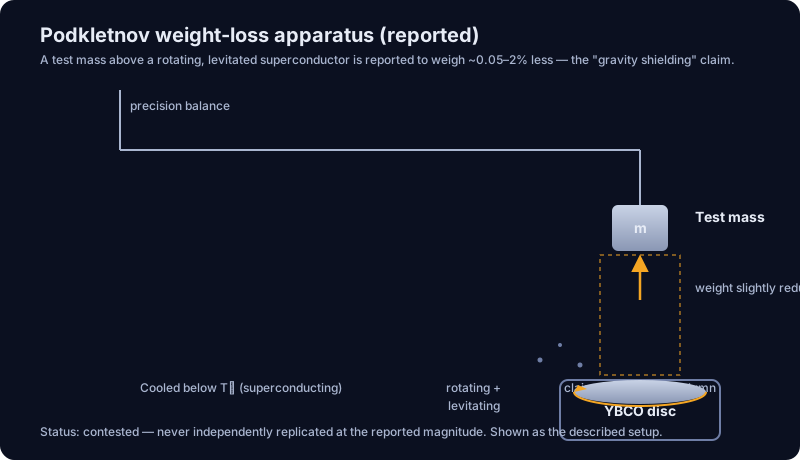
In the early 1990s Ning Li and Douglas Torr made a proposal. Inside a superconductor, they argued, the coherent spin of the lattice ions could amplify this gravitomagnetic field to detectable — even useful — levels ("AC gravity"). Around the same time, Eugene Podkletnov reported something stranger. Objects hung over a large, spinning YBCO superconductor seemed to lose a little of their weight — a claimed "gravitational shielding." He later described an "impulse gravity generator" that fired a force beam using a high-voltage discharge through a superconductor.
If real, this would be world-changing. So the only question that matters is: did it replicate?
The verdict: repeated replication failure
- Woods, Cook, Bennett & Lucas (2001) attempted the Podkletnov weight-loss effect and found null.
- Hathaway, Cleveland & Bao (2003), a careful, well-instrumented attempt, detected no weight change.
- NASA-funded evaluations at Marshall in the late 1990s never confirmed an effect.
- The 1997 Podkletnov preprint was withdrawn, and a co-author distanced himself; the peer-reviewed footprint is thin.
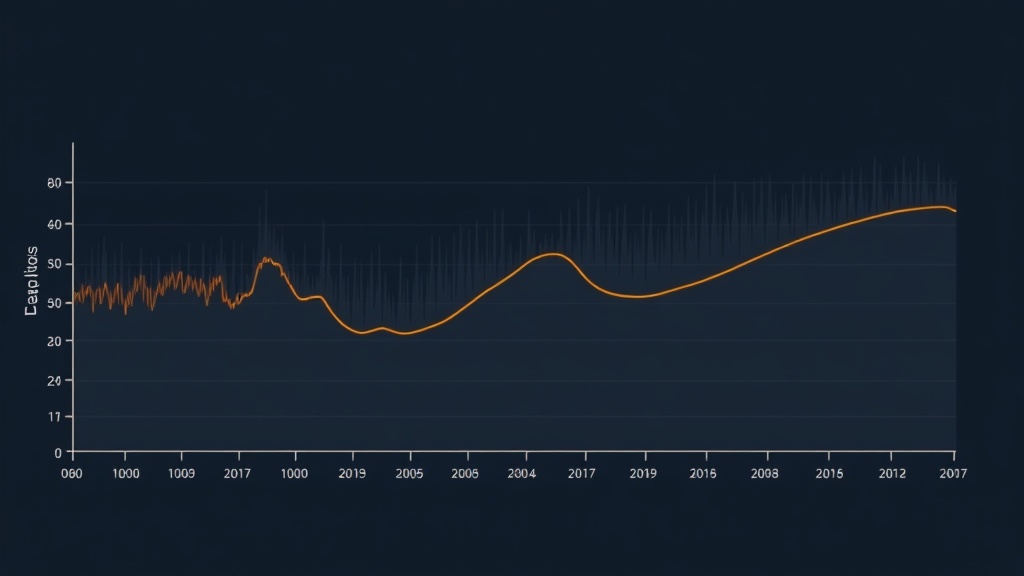
The most instructive story is Martin Tajmar's. His early experiments (2006–07) reported a small anomalous "gravitomagnetic London moment" around spinning superconductors. It was genuinely exciting. But he did not defend it. He improved his controls. In later, better-shielded runs (2009–2011), the signal shrank toward and into the noise. He then treated it publicly as most likely a systematic artifact. That is not a failure of science. It is science working exactly as it should. It is the model for the whole book.
“Every careful, independent attempt to replicate superconductor gravity modification — Podkletnov's shielding, Tajmar's London moment — has come back null or trended to zero under better control. This is a textbook non-effect.”
We agree, and we say so without flinching: the positive reports do not form an independent- corroboration chain — they are a thin, partly-withdrawn cluster, and the best-controlled experiments (including the proponent Tajmar's own) trend to null. So "superconductors usefully amplify gravity" sits at Contested, strongly disfavored. What we don't do is let the null results erase the Definitive kernel underneath: gravitomagnetism is real and measured (Gravity Probe B) — it is simply about twenty orders of magnitude too weak to be the antigravity people hoped for. The honest lesson isn't "nothing is there," it's "the real effect is exactly as small as GR says, and the large one keeps failing to appear."
Confidence ledger
- Gravitomagnetism is real weak-field GR; frame-dragging is measured. Definitive
- Rotating/superconducting matter amplifies gravitomagnetic fields to useful levels. Contested
- Podkletnov "gravity shielding" / impulse beam is a real effect. Contested
- Tajmar's early anomalous signal was a genuine new force. Contested (proponent retreated to null).
- Falsifier: an independent, controlled replication detecting the claimed amplification above systematics — repeatedly attempted (Woods 2001; Hathaway 2003) and repeatedly failed.
Sources
Primary - the claims
- N. Li & D. Torr (1991), "Effects of a gravitomagnetic field on pure superconductors," Phys. Rev. D 43, 457; (1992) Phys. Rev. B 46, 5489.
- E. Podkletnov & R. Nieminen (1992), "A possibility of gravitational force shielding by bulk YBa2Cu3O7-x superconductor," Physica C 203, 441 - the peer-reviewed origin (the later 1997 preprint was withdrawn).
- E. Podkletnov & G. Modanese (2001), "Impulse gravity generator...," arXiv:physics/0011026 / physics/0209051. (Downloaded.)
Real gravitomagnetism - the yardstick (beyond the source corpus)
- B. Mashhoon (2003), "Gravitoelectromagnetism: a brief review," arXiv:gr-qc/0311030 - GEM is real weak-field GR, but predicted lab-scale fields are ~1e-20 of the claimed effects.
- C. Everitt et al. (2011), "Gravity Probe B: Final Results...," Phys. Rev. Lett. 106, 221101 - measured frame-dragging matching GR at its tiny predicted magnitude.
Answering the critics (the honesty core)
- M. Tajmar et al. (2006-2011): gr-qc/0603033, arXiv:0707.3806 - an early anomalous signal that the proponent's own better-controlled experiments shrank into the noise. A model of falsifier discipline. (Downloaded.)
- Failed independent Podkletnov replications: Woods, Cook, Bennett & Lucas (2001), AIAA 2001-3363 - null; Hathaway, Cleveland & Bao (2003), Physica C 385, 488 - no weight change.
Echo, not corroboration: the positive reports do not form an independent chain (withdrawn preprint, disavowing co-author, thin peer-reviewed footprint); the negatives are independent and decisive.