Lattice Confinement Fusion: The Energy Substrate
NASA's deuterated-metal fusion — the most mainstream-validated node in the whole story, and its honest limits.
After several Contested chapters, here is the one node with peer-reviewed NASA papers behind it. Tellingly, it is the least glamorous. Every metric-engineering scheme in this book shares one brute requirement, whatever its mechanism: an enormous, compact energy source. This chapter is about the most credible candidate. It is also about not overclaiming, even the good news.
Why energy is the real bottleneck
Chapter 4 showed that warping the metric demands staggering energy densities. Even the most optimistic inertia- or field-based schemes need power far beyond a chemical rocket. So the honest question is not "which exotic drive?" It is "where would the energy come from?" A breakthrough in compact, high-density energy is the quiet first step. Any propulsion story must clear it first.
Strong Any metric-engineering propulsion needs a compact, high-density energy source. That is a simple energy argument, not a speculative one.
The mainstream kernel: screening and stripping
"Cold fusion" is a poisoned phrase, for good reason (we reach 1989 below). So be precise about the real nuclear physics NASA invokes. Two pieces are textbook.
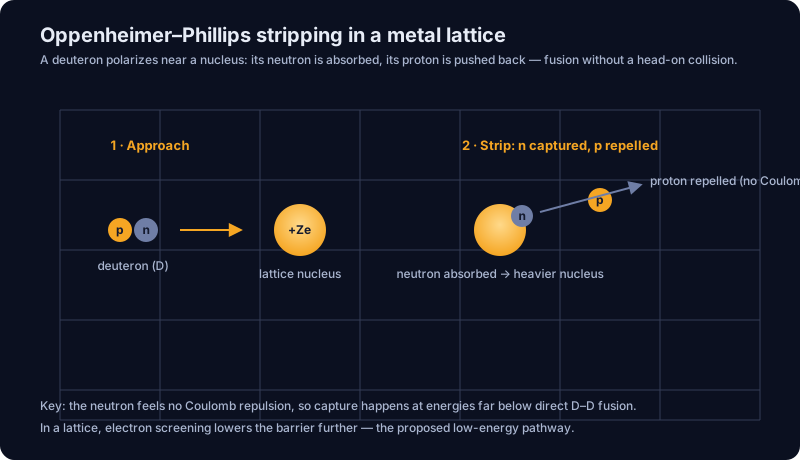
- Electron screening: inside a dense metal lattice packed with deuterium, the cloud of loose electrons partly cancels the electric repulsion between deuterons. That lowers the Coulomb barrier they must tunnel through.
- The Oppenheimer–Phillips process (1935): a way for a deuteron to react with a nucleus at lower energy than a bare proton would need.
What NASA actually reported
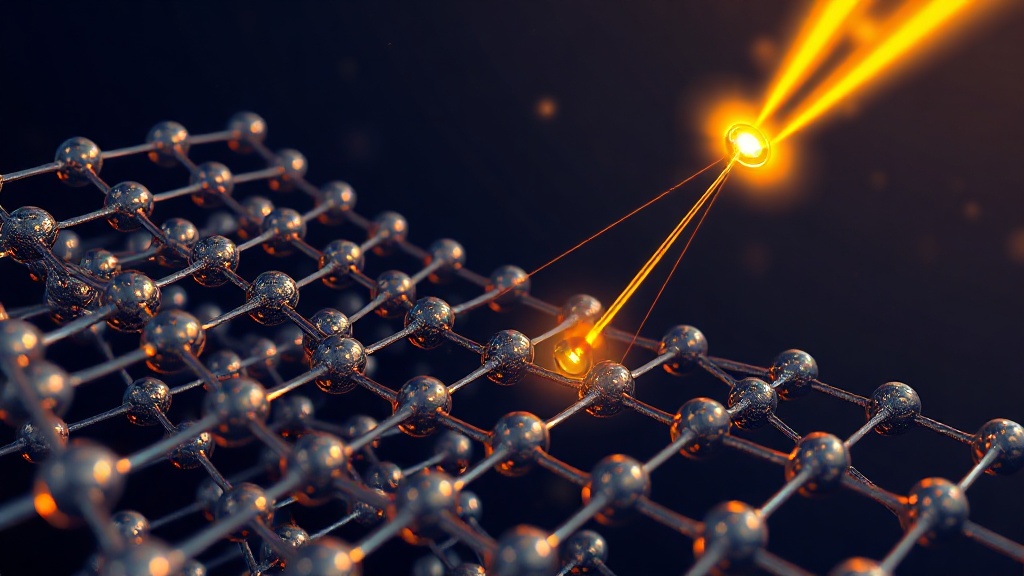
In 2020, NASA Glenn scientists (Pines, Steinetz, Benyo, Forsley and colleagues) published two peer-reviewed papers in Physical Review C, a mainstream nuclear-physics journal. They loaded metals (erbium, titanium) with deuterium. Then they hit them with high-energy gamma rays. The gammas knocked deuterons loose with enough energy to fuse. The screened lattice let the reactions proceed. They reported novel nuclear reaction products — neutrons and their signatures — in line with fusion in the lattice.
Strong Two peer-reviewed Physical Review C papers report real nuclear reactions in these gamma-hit, deuterium-loaded metals. This is the real thing. It is the book's most solid lab result outside the opening chapters.
The honest limit — and the ghost of 1989
Now the discipline. NASA's papers show reactions. They do not show net energy gain or a practical power source. Do not confuse "novel nuclear reactions seen under gamma irradiation" with "compact fusion power exists." History is the reason to be careful. In 1989 Fleischmann and Pons announced tabletop fusion. It failed to replicate, and the field was scarred for a generation. Later Google funded a rigorous, multi-lab re-examination (published in Nature, 2019). It found no excess heat at the classic claimed levels. It did note that the metal-hydride screening physics deserves study. Mainstream money looked hard and mostly got null, with a few open threads.
Independent commercial efforts add to this. Clean Planet in Japan (with Tohoku University and Miura boilers), and newer entrants like Astral Systems, report anomalous heat from loaded lattices. That is a separate lineage from NASA. It counts as Suggestive corroboration that "something anomalous happens in loaded metal lattices," pending rigorous third-party heat measurement.
“This is just cold fusion rebranded. 1989 taught us that anomalous-nuclear-reaction claims in metal lattices don't hold up, and Google's 2019 Nature study found no excess heat. Why should NASA's version be any different?”
The skepticism is earned, and we share the reflex — but the specifics matter. NASA's claim is deliberately narrower than Fleischmann–Pons: not "net energy from a jar" but "novel nuclear reaction products when we actively irradiate a deuterated lattice," published in Physical Review C with measured reaction signatures. That is a testable, mechanism-anchored result (electron screening, Oppenheimer–Phillips — both established), not a claim of free energy. We hold the line exactly where the evidence does: reactions observed Strong; net-power reactor today Contested. The falsifier is clean and welcome — independent labs failing to reproduce the reaction products under the stated irradiation conditions.
Confidence ledger
- NASA observed novel nuclear reactions in gamma-irradiated deuterium-loaded metals. Strong (peer-reviewed, PRC ×2).
- Electron screening and Oppenheimer–Phillips are legitimate, established nuclear physics. Definitive
- LCF is a proven net-energy compact fusion power source today. Contested
- Independent commercial lattice heat (Clean Planet and others) backs the anomalous reactions. Suggestive
- A compact high-density source is needed for metric-engineering propulsion. Strong
- Falsifier: independent labs fail to reproduce the reaction products under the stated conditions; or a claimed net-energy device fails independent, repeated heat testing.
Sources
The most mainstream-validated node - real NASA papers, real commercial partners - kept honest about the gap between "novel reactions observed" and "net power exists."
Primary - peer-reviewed (the Strong/Definitive backbone)
- P. Pines, B. Steinetz, L. Forsley et al. (2020), "Nuclear fusion reactions in deuterated metals," Phys. Rev. C 101, 044609. DOI 10.1103/PhysRevC.101.044609 - theory: electron screening + Oppenheimer-Phillips.
- B. Steinetz, T. Benyo, A. Chait, L. Forsley et al. (2020), "Novel nuclear reactions observed in bremsstrahlung-irradiated deuterated metals," Phys. Rev. C 101, 044610. DOI 10.1103/PhysRevC.101.044610 - the experimental companion.
- NASA Glenn LCF program page and NTRS white papers (NTRS 20210026340; 20240013692; 20205006546). (Downloaded.) grc.nasa.gov.
- J. R. Oppenheimer & M. Phillips (1935), Phys. Rev. 48, 500 - the established stripping-reaction kernel LCF invokes.
Independent commercial lineages (beyond the source corpus)
- Clean Planet Inc. (Japan) + Tohoku University (Iwamura et al.) - quantum-hydrogen-energy heat; a distinct lineage -> genuine corroboration of anomalous heat in loaded lattices, not echo.
- Astral Systems (UK) - "multi-state fusion"; a 2024-25 entrant to track.
Answering the critics
- C. Berlinguette et al. (2019), "Revisiting the cold case of cold fusion," Nature 570, 45 - a rigorous, Google-funded program: no excess heat at claimed levels, but screening physics deserves study. The fair skeptical bookend.
- The honest gap: NASA demonstrated reaction products, not net energy gain. Conflating the two is the error to avoid.