Exotic Vacuum Objects, Plasmoids, and the Orbs
Ken Shoulders' EVOs, self-organizing plasmas — and MH370 walked up the evidence ladder as a worked example.
Now we reach the images that pulled many readers into this subject: glowing orbs that seem to move and vanish with intent. Three very different things get lumped together here. There is real self-organizing plasma physics, an inventor's extraordinary claims about it, and a viral video. This chapter separates them and grades each on its own merits.
The legitimate kernel: plasmas organize themselves
Start with what is solid. Plasmas — ionized gases — really do form self-organizing, coherent structures. Winston Bostick coined the word plasmoid in 1956 for stable, self-contained blobs of magnetized plasma. Modern fusion research routinely makes spheromaks and compact tori. In 2014, Chinese researchers even caught the first optical spectrum of natural ball lightning. They found soil-element lines, which support a real plasma-chemical explanation for luminous "orbs."
Strong That coherent, self-sustaining plasma objects exist is established physics. This is the real foundation any "orb" discussion should start from.
The extraordinary claim: Ken Shoulders' EVOs
The inventor Ken Shoulders was a real microelectronics pioneer. He spent decades on what he called Exotic Vacuum Objects (EVOs). These were micron-sized clusters. He claimed each held hundreds of billions of electrons in a tiny volume, defying the Coulomb repulsion that should blow them apart. He said they bored clean, cold channels through ceramic and drove anomalous (LENR-like) energy release. His patent, "Energy conversion using high charge density" (US5018180A, 1991), is the primary document.
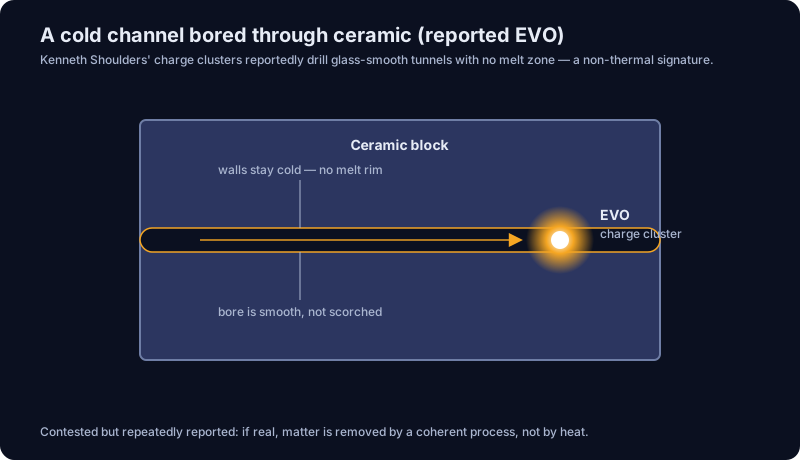
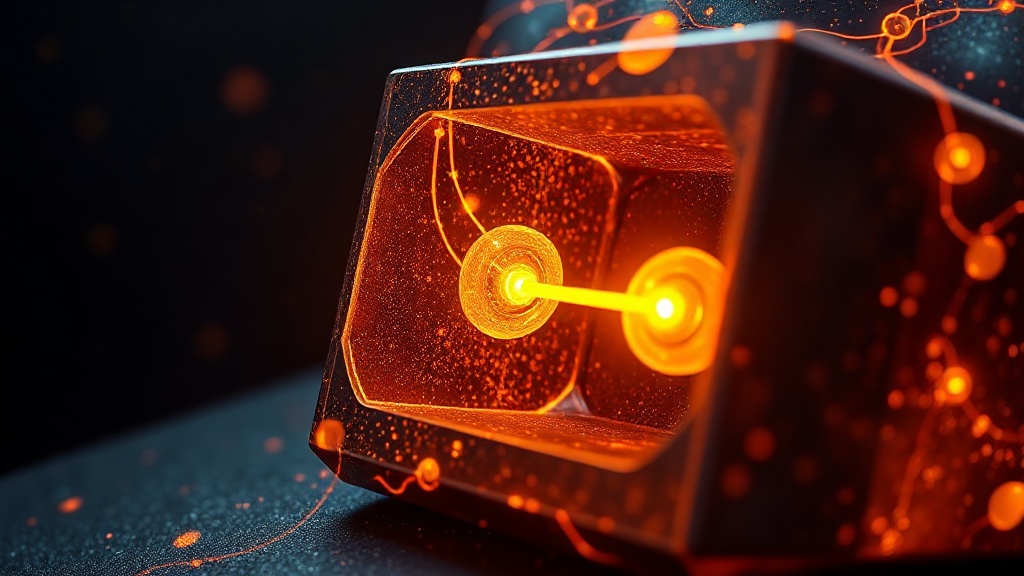
One recent development stands out. A mainstream-credentialed scientist — Graham Hubler, a former Naval Research Laboratory materials physicist — published a rough physical mechanism for charge clusters in 2022. He reached for a real explanation, not mysticism. That nudges the mechanism question up to Suggestive. But the core EVO claims have lived for four decades almost entirely inside the LENR community. There has been little independent mainstream replication. By Chapter 1's rule, that is an echo cluster, not broad independent corroboration.
Contested EVOs as Shoulders described them — Avogadro-scale charge densities defying Coulomb repulsion — remain unreplicated by mainstream labs.
The worked example: MH370
Here — and only as a worked example of the claimed effect — we walk the famous MH370 "orb" videos up the ladder. The clips claim to show the missing airliner ringed by orbs and then flashing out of existence. The proposed reading: the orbs are giant EVOs or plasmoids doing the metric engineering of the earlier chapters. So apply the method.
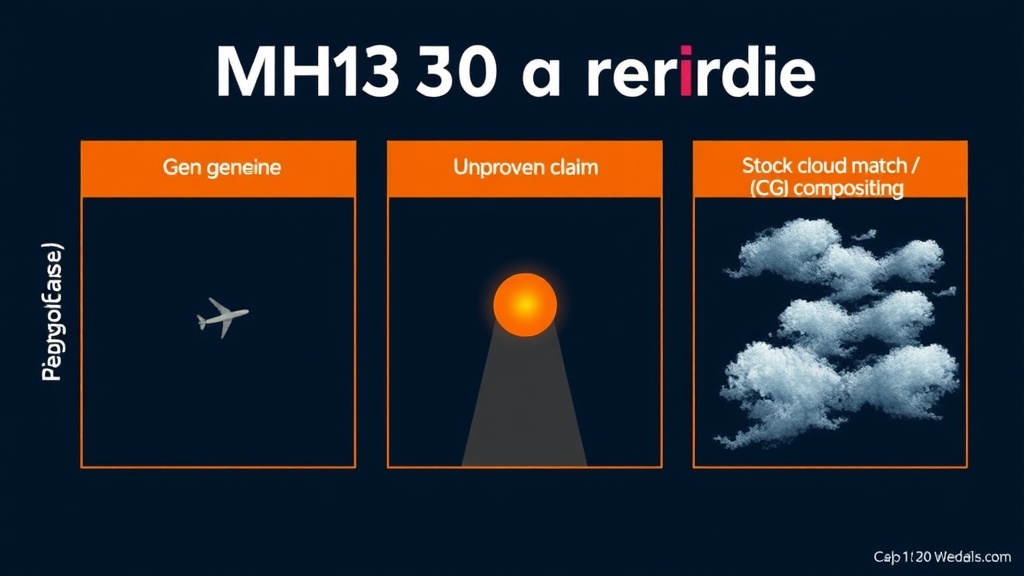
The debunk is strong and specific. The 2024 Skeptical Inquirer investigation ("The MH370 Teleport Hoax") traced the videos to an anonymous creator, RegicideAnon. It matched the cloud imagery to commercial HD stock cloud textures. Metabunk's frame-by-frame thread (13104) showed the sequence can be rebuilt in Blender and After Effects. It also showed the "satellite" and "drone" FLIR elements do not match real sensor optics. A professional VFX breakdown by Corridor Crew argued the footage looks like CGI compositing.
Contested That the MH370 orb videos are authentic sensor footage is strongly disfavored; the evidence to date points to a CGI/stock-composite origin.
“The MH370 videos are a hoax — the clouds are matched to known stock footage, the whole sequence is reproducible in off-the-shelf VFX tools, and the sensor overlays don't match any real satellite or drone optics. Building on this footage discredits everything around it.”
We agree the footage cannot bear evidentiary weight, and we demote it accordingly — which is exactly why it appears here as an illustration of a claimed effect, never as evidence for the physics. The stock-cloud match and the reproducibility in Blender/After Effects are, to us, decisive on authenticity. The discipline is to notice what does and doesn't collapse with it: the debunk sinks the video, but it says nothing about Chapter 2's Casimir force or Chapter 12's NASA fusion data, which never rested on it. Treating a contested artifact as decorative rather than load-bearing is the entire point of tiering. The plasmoid physics is Strong; the EVO claims are Contested; the video is Contested — and none of them are load-bearing for each other.
Confidence ledger
- Self-organizing plasmoids / charge structures exist in plasma physics. Strong
- EVOs as Shoulders describes them are a real, reproducible new state of matter. Contested
- A credentialed physical mechanism for charge clusters is being proposed (Hubler 2022). Suggestive
- The MH370 "orb" videos are authentic footage of a real event. Contested (strongly disfavored).
- MH370 orbs are macroscopic EVOs/plasmoids. Speculative (worked example only, not evidence).
- Falsifier: independent mainstream reproduction of Shoulders' charge-cluster densities with controlled diagnostics; and, for the video, provenance/metadata authenticating an original sensor capture. Neither exists.
Sources
Primary - EVOs
- K. Shoulders, US5018180A, "Energy conversion using high charge density," granted 1991-05-21 (Google Patents) - the primary charge-cluster document. (Downloaded.)
- G. Hubler (2022), "A Possible Heuristic Explanation of Exotic Vacuum Objects (EVOs, Charge Clusters)," J. Condensed Matter Nucl. Sci. 36, 30 (open access) - a former Naval Research Laboratory materials physicist offering a physical (not mystical) mechanism; the most credible EVO source. (Downloaded.)
Legitimate self-organizing-plasma physics (the real kernel, beyond the source corpus)
- W. Bostick (1956), "Experimental Study of Ionized Matter Projected across a Magnetic Field," Phys. Rev. 104, 292 - the original plasmoid work.
- J. Cen, P. Yuan & S. Xue (2014), "Observation of the Optical and Spectral Characteristics of Ball Lightning," Phys. Rev. Lett. 112, 035001 - the first natural ball-lightning spectrum (soil-element lines); a mundane chemical/plasma competitor for luminous "orbs."
Answering the critics - the MH370 footage (worked example only)
- "The MH370 Teleport Hoax," Skeptical Inquirer (2024) - traces the videos to anonymous creator RegicideAnon, matches the clouds to stock HD cloud textures, identifies composited FLIR elements.
- Metabunk thread 13104 - frame-by-frame: reproducible in Blender + After Effects; stock-cloud match; FLIR inconsistent with real sensor optics.
Echo, not corroboration: four decades on, EVO claims live almost entirely inside the LENR community (JCMNS, LENR-CANR) with little independent mainstream replication - an echo cluster by Ch. 1's rule. Hubler (2022) is the notable exception reaching for a mainstream mechanism.