The Spacetime Metric
Lecture 657 min 46 sec

Energy conditions and their violations

The assumptions that turn geometry into physically plausible matter.

Season 1 · remastered lesson

Watch the full lecture

57 min 46 sec · Captions: English · Español · Português · Français · Polski

A number line for one observer’s local energy density: negative on one side, zero at the center, positive on the other. One reading does not decide an energy condition for every observer.

Use the arrow keys to change the speed.

Playback speed: normal.

Read the transcript

Visual explanation

Explore the central idea
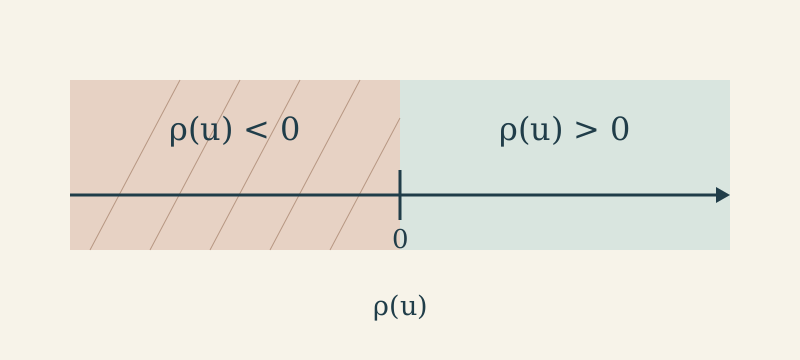
A number line for one observer’s local energy density: negative on the hatched left, zero at the center, positive on the right.
A sign diagram, not measured data or a spatial map. Here ρ(u) is the energy density measured by an observer with four-velocity u. One negative reading violates the weak energy condition; one positive reading does not establish it. The condition must hold for every timelike observer.

Read alongside

Wormholes, Energy Conditions, and the Negative-Energy Budget

The experiments, equations, and original papers behind the lesson.

Open the companion chapter →

Retrieval practice

Check your understanding

A few questions on this lecture. Choose an answer, then check it. Nothing is saved or sent anywhere.

  1. Question 1 of 4Why are the energy conditions called conditions rather than laws?
  2. Question 2 of 4 · Predict firstBefore you check: a stress-energy source violates the null energy condition. What do you expect for the other three conditions?
  3. Question 3 of 4 · Predict firstBefore you check: according to the Ford-Roman quantum inequality, if you want to hold negative energy density for a longer time, what must happen to its magnitude?
  4. Question 4 of 4How does the lecture describe the Ford-Roman quantum inequality?